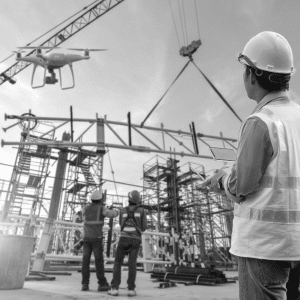
According to a McKinsey report, the $12 trillion architecture, engineering, and construction (AEC) industry has traditionally slow to digitize and innovate. However, recent emerging technology in the sector has accelerated to address strong demand for infrastructure, a shortage of skilled labor, and increased stakeholder pressure for data transparency and integration.
The AEC industry faces disruptive challenges—intense competition and limited financial resources for innovation. Even advanced technologies such as Building Information Modelling (BIM) encounter obstacles such as prolonged timelines. There’s fresh hope for the AEC industry, however. Work automation is emerging as a gamechanger for the sector’s future success.
As projects become more complex, the AEC industry must keep pace with evolving technology, new materials, and building codes. These advancements often mean significant investments to maintain expertise.
The AEC industry can enhance efficiency, ensure compliance, and reduce project risks with work automation. Potential improvements from knowledge work automation adoption will transform the sector’s future automation.
Embracing automation holds the promise of refining design and construction processes. The construction industry requires improved collaboration among various stakeholders, including architects, engineers, contractors, and suppliers. This can be accomplished by leveraging digital platforms and collaboration tools that enable effective communication and data sharing among team members.
Financial limitations, coupled with fierce competition, also pose challenges for the AEC industry. Building structures and projects can be costly, leaving companies with limited capital.
Competition among firms intensifies the pressure to keep costs low, leaving little room for exploring and implementing innovative technologies. Limited financial resources become a barrier to investing in innovative solutions such as automation software.
Design processes within the AEC industry are inefficient, contributing to delays and complications. Manual work needed for correcting errors bloats project timelines and increases the risk of delays.
Transforming the AEC Industry with Knowledge Work Automation
Knowledge work automation has become a transformative force in the AEC industry, streamlining processes and enhancing efficiency. Workflow automation plays a pivotal role by digitizing and optimizing routine tasks, reducing manual work, and minimizing errors. This is especially in project management, where tight deadlines and accuracy are paramount.
Automation also brings significant benefits to compliance and document management. Automating compliance checks ensures projects meet industry standards and legal requirements amid regulatory changes. Document management systems, powered by automation, simplify the organization, retrieval, and sharing of project-related documents, fostering collaboration, and ensuring stakeholders have access to the latest information.
Artificial Intelligence (AI) represents another frontier in knowledge work automation for the AEC industry. AI assists architects and designers by automating complex design processes, generating iterations, and predicting potential issues. This not only accelerates the design phase, but also enhances the quality of the final output.
Technology such as document management empowers the decision automation of work processes, opening new avenues for efficiency and progress.
Advancing AEC with Innovations
Process automation strongly impacts the productivity of AEC project teams. It speeds tasks, removes obstacles in teamwork coordination, and ensures projects are on time. By removing menial or mundane tasks, individuals can focus on what’s important.
BIM automates the creation and management of digital information concerning the physical and functional characteristics of buildings and infrastructure. It also enhances collaboration and high-level decision-making across the project lifecycle.
Robotics in Construction
Robotic process automation (RPA) boosts efficiency, reduces labor costs, and operate well in hazardous environments.
Digital Twin Technology
Digital twins create a virtual replica of a physical structure, allowing real-time monitoring and analysis. This assists in predictive maintenance, performance optimization, and complex problem-solving.
AI-driven Project Scheduling
Analyzing historical project data, assessing risks, and optimizing schedules are all done by AI. AI and automation decrease delays and enhance overall project planning.
Augmented Reality (AR) for construction
To visualize construction projects in the real world, professionals turn to AR. It aids in design thinking with visuals, project collaboration, and on-site decision-making.
Future of Automation in AEC
Technology and knowledge work automation are shaping the future of the AEC industry. Innovations in the field redefine traditional practices and optimize design, construction, and process management.
FAQs
What benefits do knowledge workers in the AEC industry gain from automation?
Automation in the AEC industry boosts efficiency by streamlining tasks, allowing workers to focus on more valuable activities. It mitigates risks, enhances collaboration, saves time, and creates opportunities for innovation in design and construction processes.
What are the concerns of automating knowledge work in the AEC industry?
While offering substantial benefits, automation in AEC involves initial implementation costs and potential resistance to change among workers. The need to learn innovative technologies, job displacement concerns, and heightened security and compliance considerations are additional factors that should be addressed.
Predictive maintenance (PdM)(opens in new tab) is a proactive maintenance strategy that uses data analysis tools and techniques to detect anomalies and potential issues in machinery and equipment before they fail and lead to unscheduled downtime. Unlike traditional maintenance approaches—such as reactive maintenance(opens in new tab), which addresses equipment only after it fails, or preventive maintenance(opens in new tab), which relies on fixed schedules—PdM aims to predict and prevent failures through continuous monitoring and analysis.
PdM spans various industries, including manufacturing, energy, transportation, and healthcare. Human-machine collaboration in PdM involves the integration of advanced technologies, such as sensors, machine learning (ML) algorithms, and data analytics, with human expertise and decision-making. This collaboration leverages the strengths of both humans and machines to enhance maintenance processes. Machines handle data collection and analysis, providing insights and predictions, while humans interpret these insights, make informed decisions, and take necessary actions.
In this blog, we’ll explore the collaboration between humans and machines in PdM, its benefits and challenges, and future trends and representations.
The role of machines and humans in PdM
Machines and people have been working together since the great revolution, and they will continue to collaborate across sectors with new and exciting changes. As we discussed previously, machines are advancing to the point where they can self-diagnose(opens in new tab). What does this kind of evolution mean for the relationship between people and machines?
Jason Afara, our Director of Solutions Consultants, shares his thoughts on the machine and human dynamic in PdM:
“Right now, the critical thing to remember in the relationship between human and machine, at least in the context of predictive maintenance, is this … machines collect the data, analyze it, predict problems, and automate tasks, while the person has the job of interpreting the data, making the decisions on what to do with the data that’s been analyzed, implement any changes, and always look to improve,” says Jason.
Below are some common examples of the role of machines in PdM:
Data collection: Sensors and IoT devices continuously monitor equipment, collecting data on temperature, vibration, and pressure.
Data analysis: Machine learning (ML) algorithms process and analyze vast amounts of data to identify patterns, anomalies, and potential failure points. This ultimately assists in the decision-making process.
Predictive analytics: Advanced predictive models forecast equipment failures and maintenance needs based on historical and real-time data.
Automation: Automated systems can trigger alerts, schedule maintenance tasks, and perform certain maintenance activities without human intervention.
“The role of the machine in PdM is also advancing in how we can react. Previously, if something didn’t sound right with a machine, it would have been flagged and fixed by a technician who had been there for a while, or it would have been seen during a preventative maintenance schedule. Now, we don’t necessarily need to interact with the machine. We get the data right to our fingertips in something like a CMMS, and that data will get to us quicker and with even more detail,” Jason adds.
Jason indirectly references the evolution of the human-machine collaboration, something covered by experts and authors in the manufacturing and automation sector [1]. As machines advance and quicken with the quality and amount of data they can capture, people will evolve to make faster decisions.
Jason highlighted a strong point earlier regarding the role of people in human-machine collaboration that we need to circle back to. “We can’t have successful PdM without people,” Jason adds. People are essential in PdM for tasks that require critical thinking, contextual understanding, and complex decision-making.
The human role in PdM includes:
Interpretation of data: Engineers and maintenance professionals interpret the insights and predictions generated by machines, considering factors like operational context and business priorities. This task isn’t easy, and different people can look at data differently. It’s important to collaborate with your team and test your thinking.
Decision-making: Humans decide on the appropriate maintenance actions, balancing cost, safety, and operational impact. They also get support from other departments to gain access to the machine.
Adaptability:Maintenance professionals bring their expertise, problem-solving skills, and speed when it comes to challenges and managing the rapid evolution of PdM technologies.
Implementation: Skilled technicians carry out maintenance tasks, repairs, and adjustments that machines are not equipped to handle.
Continuous improvement: Human expertise is vital for refining PdM processes, incorporating feedback, and enhancing the accuracy of predictive models.
It goes without question that people and machines need to collaborate to execute PdM and enhance maintenance processes. Let’s review a case study that highlights the success of this kind of collaboration.
A practical example of human-machine collaboration in PdM
In 2017, the Massachusetts Bay Transportation Authority (MBTA) commuter rail system experienced the highest number of mechanical failures in the U.S., primarily involving locomotives [2]. In response, the MBTA created a program to upgrade its legacy locomotives, incorporating AI and machine learning to predict maintenance problems before they lead to breakdowns.
Ryan Coholan, the MBTA’s chief railroad officer, recognized the potential of data analytics to improve commuter rail performance. The MBTA previously collected diesel locomotive oil samples and conducted primary analyses, but an approach was needed to relate sample values to maintenance problems. Coholan enlisted Mike Jensen from 4Atmos Predictive Analytics to explore using machine learning models to predict engine breakdowns. The MBTA had extensive historical data from oil samples, which was used to train the model.
The trained machine learning model analyzed elements within the oil to predict engine issues. It could identify high-probability engine problems within the next fifteen days, providing specific predictions like turbocharger or injector failures based on oil composition. The model’s success led to the implementation of regular oil analysis, now conducted every ten days. The project, named Project Velocity, integrated AI-driven oil analysis into the MBTA’s daily operations. The MBTA established an in-house oil lab, enhancing its maintenance capabilities and attracting interest from staff.
Benefits of the MBTA’s PdM model
The predictive maintenance model provided substantial benefits:
Cost savings: Predicting and preventing failures before they occurred saved significant time and money.
Operational efficiency: Preventing on-track failures avoided passenger inconvenience and improved service reliability. Awareness of data at near real-time, remotely from the machine. Ability to change context based on the available data.
Investment and practices: The success in predictive maintenance prompted a $40 million investment in locomotive rehabilitation and changes in maintenance practices.
The program dramatically increased the mean miles between locomotive failures and improved on-time performance for the commuter rail system.
Benefits and challenges of human-machine collaboration
As we’ve seen in the MBTA’s project, human-machine collaboration in PdM can be very effective and beneficial. Still, it is important to highlight the challenges of this kind of collaboration. Below is a table to illustrate some of the benefits and challenges of this collaboration:
Benefits
Challenges
Increased accuracy: Combining machine-generated insights with human expertise enhances the accuracy of predictions and maintenance decisions.
Data quality and integration: Ensuring high-quality data from diverse sources and integrating it seamlessly is complex and requires robust systems.
Reduced downtime: Proactive maintenance based on precise predictions minimizes unplanned downtime and extends equipment life.
Skill gaps: There is often a gap between the technical skills required for PdM technologies and the existing capabilities of the workforce.
Cost savings: PdM reduces maintenance costs by preventing failures and optimizing maintenance schedules.
Change management: Implementing PdM requires a cultural shift and buy-in from all levels of the organization, which can be challenging.
Improved safety: Early detection of potential issues ensures a safer working environment by preventing hazardous equipment failures.
Cost and investment: The initial investment in PdM technology and training can be substantial, posing a barrier for some organizations.
By addressing the challenges and capitalizing on the benefits, industries can achieve greater efficiency, safety, and cost-effectiveness in their maintenance practices.
Future trends of human-machine collaboration in PdM
As we reviewed earlier, the future of human-machine collaboration is an exciting topic; when data becomes faster to access, people evolve to respond quickly, too. Some trends shaping the future of PdM include the integration of IoT technologies and Industry 4.0, as well as the adoption of emerging technologies like digital twins.
“IoT devices like sensors are collecting real-time data from equipment, but these devices are going to allow us to monitor data down to the second, not down to the hour, or even several days of data,” says Jason.
It’s not necessarily a psychic prediction to say that the future of IoT devices and Industry 4.0 will involve faster, better, and more responsive data readings on machines. We know from other technological evolutions that product development focuses on things like speed of data transfer and lowering the cost of manufacturing, and therefore, a lower price to purchase said technology. In the later point, reducing the cost means more access, which means more manufacturing facilities can implement smart factories.
A confident prediction is the fusion of physical equipment with digital systems, which enables real-time interaction and autonomous decision-making. Machines equipped with cyber-physical systems (CPS) can self-monitor and communicate their status, optimizing maintenance schedules. Additionally, the use of digital twins more proactively will prove to evaluate the outcomes of various maintenance actions, leading to more informed decision-making. Digital twins and machine learning will likely work with artificial intelligence (AI) to automate anomaly detection, learn even more in-depth about a team’s maintenance process, and evaluate current and ongoing strategies.
Human-machine collaboration in PdM represents a transformative approach
The evolution of human-machine collaboration in PdM reflects a continuous shift towards more proactive, efficient, and intelligent maintenance practices. From the early days of reactive maintenance to the present era of AI-driven predictive maintenance, the collaboration between humans and machines has been instrumental in enhancing equipment reliability, reducing costs, and improving operational efficiency. As technology continues to advance, this collaboration will only deepen, leading to even more innovative and effective maintenance solutions.
Wealth management firms are embracing digital transformation. Work automation is changing how financial advisors manage business. Artificial intelligence (AI) and automation will make it possible to do business efficiently and advance the quest to increase speed.
Knowledge work automation replaces endless paperwork and improves productivity. Automating workflows allows wealth management firms to focus on advisory activities and elevate customer experience.
The wealth management sector depends on client relationships and operational efficiency. Work automation aggregates data from multiple sources and updates other systems in real time. It ensures a thorough and up-to-date overview of client portfolios while baking in regulatory compliance into workflows.
Implementing intelligent tools increases performance and reveals exciting growth opportunities. Such tools leverage machine learning algorithms for data analysis. Handing off time-consuming manual tasks to automated workflows drives enhanced productivity and employee satisfaction.
The future of knowledge work also supports work-life balance. Late nights at the office or working around the clock are passe. Financial analysts routinely work more than the 40-hour work week. That’s why wealth management professionals seek solutions to balance work commitments with personal responsibilities.
Working overtime on repetitive tasks that can be automated creates poor morale. The automation of knowledge work helps wealth management companies meet workflow demands in modern working environments.
In a financial firm, automation software fills a wide range of knowledge gaps. It can support market research insights, provide detailed client profiles, track regulatory changes, help suggest personalized investment strategies, and monitor portfolio performance. Firms are increasing their operational budgets to usher in information technologies.
How Work Automation Improves Wealth Management
A digital workplace focuses security breach awareness through real-time monitoring, alerts, encryption, access controls, auditing, and incident response protocols. Document management best practices are essential and keep client information safe. This includes secure document sharing and collaboration. Streamlining, optimizing, and automating institutional knowledge eliminates content chaos and supports high-level decision-making and complex problem-solving.
Robotic process automation (RPA) uses software robots to automate data entry, extraction, and report generation tasks including document control and management. Software robots streamline back-office processes, reduce errors, boost efficiency, enhance client experience, and provide an easy-to-navigate user interface.
Lack of access to consistent information leads to file duplication or inaccurate information sharing. Work automation reduces human error. AI and automation tools enable employees to monitor and review financial records or identify errors.
Asset Management and Wealth Management Elevated
Before emerging technologies such as work automation tools, skilled knowledge workers’ responsibilities included manually streamlining business process automation. Sorting through data and adhering to compliance checks increased their workload. Documents were not easily accessible.
Automated systems replace manual data handling, ensuring accurate decision management. Managing large-scale daily trades is complex. Managers at multiple financial institutions must review and validate trades.
Accurately updating customer portfolios increases the chance of human error. Document management software mitigates this risk. Sorting documents by category can help organize client information. Work categories improve workflow structure.
Automating electronic data processes
Quality assurance checks and data validation ensure compliance and accurate filing of client portfolio records within work automation management systems. Managers receive notification signals when problems or discrepancies are present. Asset managers can shift their focus to reviewing issues without delays. Work automation management relieves fiscal pressure due to increasing regulatory protocol costs.
Efficient automation boosts employee satisfaction and morale, productivity, and retention. Firms with satisfied and engaged employees are better equipped to deliver exceptional service to clients. Knowledge management platforms free employees’ time to develop relationships and provide advice. Bottom line: It helps them gain a competitive edge.
Asset managers work under intense pressure. Lingering financial penalties require intelligent document auto-tagging. Onboarding new clients while managing existing clients involves multitasking. Growth is reliant on trust and reputation.
Digital document management benefits high-performing firms. It gives advisors real-time access to every client portfolio and the opportunity to delegate tasks. Delegating workload to junior advisors increases productivity. A senior advisor can help high net worth clients with financial planning, investment advice, and portfolio management.
Portfolio clients can receive information about trades or investments digitally. Reducing approval time allows managers to work on multiple trades and accounts. Document storage systems track all behavior.
FAQ
Why are wealth management firms using work automation?
Wealth management firms use work automation software to reduce operation costs, increase growth, and improve work performance.
What is document automation?
Document automation software generates documents automatically, using rules set up for data collection. Employees can locate files in a central database.


Recent Comments