M-Files was founded on the vision to help knowledge workers to work smarter
M-Files was founded two decades ago based on a simple idea: what if documents could be organized based on what they are instead of where they are located? What if users could save documents only once but view, organize and find them in multiple ways based on their unique needs? This would free organizations from trying to define a folder structure that everyone is satisfied with and free users from trying to remember where documents were supposed to be saved.
After the first idea got wings, another novel insight emerged: documents are never standalone but always connected to some context or business process. What if we could leverage what we already know about the documents and automatically apply business processes and governance rules? This approach would eliminate manual effort from users and would help organizations stay compliant with internal policies and external regulations.
While M-Files has continued product innovation and capability expansion, these two foundational ideas have remained at our core for two decades and today we have more than 5000 customers in over 100 countries helping knowledge workers find information faster, to work smarter and ensure security and compliance. Our founder and product innovator is still hands-on, pushing us towards the next waves of technological excellence and we are extremely well positioned to leverage Generative AI on our mission to help knowledge workers to work smarter.
Our approach is unique in the information management market
All vendors in the document management market have similar capabilities on paper: they all manage documents and metadata to some extent and have document workflows and business process management capabilities. However, the M-Files folderless, metadata-driven approach remains unique in the marketplace. Unlike other vendors, we have an object-oriented information model that can be used to manage any enterprise information in addition to documents. Our ability to pull in master data from multiple enterprise systems, create relationships between business objects and documents, and drive associated business processes in a single integrated solution is unique. This is also a perfect foundation for leveraging Generative AI (GenAI) since it needs curated data in context to provide accurate and relevant responses.
While these capabilities create tremendous value for our customers, they are sometimes hard to explain for people who have pre-conceived expectations for document management. Market categories help people understand products, provide the ability to make product comparisons, create a common vocabulary, and open doors for analyst firms to describe markets or software review sites to gather end-user feedback.
However, if products are not easily classified, because they offer competitive differentiation, how can they be properly compared?
Knowledge work automation describes what we do, not the segment we are in
Most of the modern workforce are gradually becoming knowledge workers, and this work is highly collaborative and involves reading, writing, and processing a lot of information. In many industries, that information requires strong governance due to sensitivity, regulation, or standards.
The emergence of GenAI has created significant new opportunities in how software-based automation can transform business processes that involve documents and unstructured information. In our experience, customer expectations have begun to shift beyond traditional document management, collaboration, and transactional use cases to include the need to automate as much of the knowledge work as possible. By doing so, knowledge workers can focus on the work that matters and are not burdened with administrative tasks. We have adopted the concept of knowledge work automation at the core of our positioning as it speaks to the fact that we can enable customers to automate all aspects of knowledge work with the help of existing and emerging technologies. For us, speaking to our prospects and customer in a way that resonates is our priority.
Gartner recognizes our ability to execute and deliver innovation
Gartner is the most referenced analyst firm covering the document management market. Due to perceived stagnation of the market, Gartner decided to discontinue their Magic Quadrant for Content Service Platforms in 2021. GenAI created a surge of innovation to that market and in response, Gartner reintroduced the Magic Quadrant as the Document Management Magic Quadrant.
M-Files was featured in the CSP Magic Quadrant for over a decade. Gartner included M-Files in the 2024 Magic Quadrant for Document Management and we were scored high on our Ability to Execute due to our maturity with the aspects customers value including: Product/Service, Customer Experience, Market Responsiveness, Company Viability, and Track Record. Gartner also praised us for our ability to execute and deliver innovations to the market. Our integrated AI capabilities were acknowledged in a separate Gartner Market Quadrant for Generative AI Knowledge Management / General Productivity, where M-Files was positioned as a Leader.
During the assessment process, it was clear to us that there were gaps in the analysts’ understanding of our vision and strategy. As discussed, M-Files is unique in the market and that presents a challenge to fit us into the mold made for traditional document management. This misalignment affected our scores for Market Understanding and Strategy, resulting in our position as a Challenger vs. a Leader.
Customer-centricity is a core value for M-Files
M-Files has three core values: Make it Happen, Help Others and Love Customers. Customer focus has been a core value for us from the beginning and our best-in-class retention rates and customer satisfaction scores prove we continue to do the right things for our customers. We engage with customers regularly through user research panels, global and regional user conferences, and customer shadowing programs. Listening to customers and taking their feedback into account for our product roadmap is evident in our ability to execute.
While it is always humbling to receive third party recognition and awards, our most important validation comes from our customers. Their feedback keeps us centered on what matters and their continued loyalty keeps our business growing. Anyone looking at M-Files can take insight from our customers; they understand our value and happily testify to that. Check out our Voice of the Customer page, to see that 96% of customers would recommend M-Files. Or browse our case studies to find customers across industries and regions and the value they have realized.
We are leading the charge in knowledge work automation, and we know many other will follow.
Transforming Business with M-Files and Microsoft 365: A New Era of AI-Driven Productivity
What if your business could harness the power of artificial intelligence to revolutionize the way you manage information and collaborate? In today’s fast-paced digital world, the integration of M-Files and Microsoft 365 is doing just that, offering a seamless blend of document management and productivity tools that are enhanced by AI.
The AI Advantage in Modern Business
Artificial intelligence is no longer a futuristic concept; it’s a present reality that’s reshaping businesses across the globe. From automating routine tasks to providing deep insights, AI is a game-changer. It’s helping businesses to:
Boost Efficiency: By automating repetitive tasks, AI allows employees to focus on what matters most.
Enhance Decision-Making: AI delivers real-time data and insights, enabling faster and smarter decisions.
Improve Customer Experience: Personalized interactions and proactive service are just the beginning.
Drive Innovation: AI opens doors to new products, services, and ways of working.
M-Files and Microsoft 365: A Powerful Combination
When M-Files, a leading document management solution, integrates with Microsoft 365, the result is a powerful synergy that enhances the capabilities of both platforms. Here’s how:
Unified Access: M-Files provides a single point of access to all your data, regardless of where it’s stored, within the familiar Microsoft 365 environment.
Metadata-Driven Organization: Say goodbye to complex folder structures. M-Files uses metadata to organize and find documents with ease.
Automated Workflows: Streamline your business processes by automating document-centric tasks, from approvals to compliance checks.
Enhanced Security: Leverage Microsoft 365’s security framework to protect your sensitive information with robust permissions and access controls.
Real-Time Collaboration: Work together on documents in real-time, confident that everyone is on the same page with version control and co-authoring features.
Real-World Impact
Businesses across various industries are already reaping the benefits of this integration. For example:
Accounting: Streamline document management, enhance compliance and security with automated workflows.
Legal Firms: Efficiently manage case files and legal documents, ensuring organization and accessibility.
Manufacturing: Streamline quality control processes by automating the routing and approval of inspection reports.
This paradox often arises because either work is done incorrectly, or too much maintenance is performed in the first place. Surprisingly, what’s labeled as preventive maintenance can sometimes have the opposite effect, contributing to equipment failures instead of preventing them.
Why is maintenance strategy optimization crucial?
Planned maintenance optimization (PMO) strategies is essential for maximizing equipment reliability, reducing downtime, and minimizing operational costs. A well-optimized strategy(opens in new tab) ensures that resources are being used efficiently, focusing on the most critical assets and maintenance tasks that have the highest impact on performance. Not only does it save money, but it also improves the lifespan of machinery(opens in new tab) and ensures smoother operations. With organizations increasingly facing the challenge of balancing maintenance costs with the need for high uptime, strategy optimization becomes crucial for long-term success.
Key elements of an effective maintenance strategy
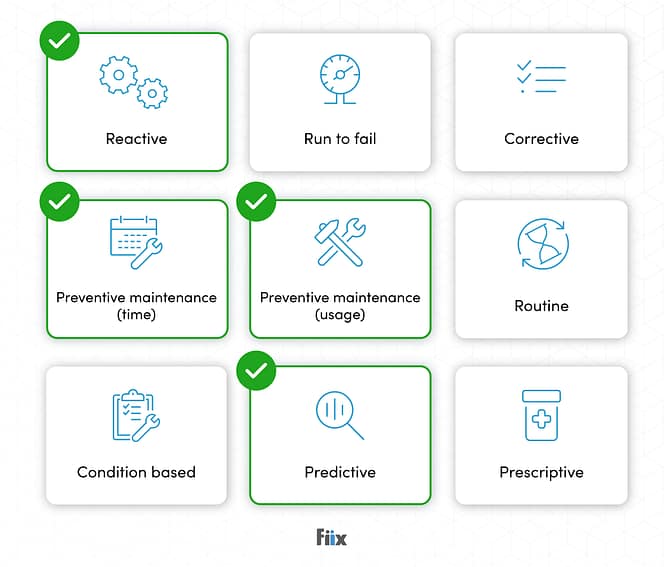
A successful maintenance strategy should include a mix of reactive(opens in new tab), preventive(opens in new tab), and predictive(opens in new tab) approaches, tailored to the needs of specific equipment. Reactive maintenance is often necessary for unforeseen breakdowns, but relying solely on this approach can lead to high costs and equipment downtime. Preventive maintenance (PM) involves scheduled checks to avoid potential failures, but it’s only effective when optimized. Predictive maintenance leverages data to anticipate failures before they occur, allowing teams to act at the right time.
Combining these strategies, driven by data and continuous improvement, is key to an optimized approach. The goal is to strike a balance where the right tasks are completed at the right time, using the fewest resources while providing maximum value.
Minimizes downtime and reduces costsOptimizes maintenance schedules
Requires investment in technology and trainingCan be complex to implement
Automotive: IoT sensors in factory robots detecting early wearEnergy: Smart grid monitoring to prevent transformer failures
Steps to optimize your maintenance strategy
Optimizing a maintenance strategy starts with a detailed assessment of current processes. By analyzing existing maintenance schedules, failure data, and equipment performance, organizations can identify areas for improvement. Next, planning involves prioritizing maintenance tasks based on asset criticality and failure risk.
From there, organizations can implement preventive maintenance optimization techniques, including reliability centered maintenance (RCM) and failure mode and effects analysis (FMEA). FMEA is a step-by-step risk management process and analysis tool for identifying where, when, how, and why a failure might occur in a design, manufacturing, or assembly process for a product or service. It determines the impact of different failures to identify the parts of the process that need to change.
These methods provide a systematic way to identify potential failure modes and optimize the maintenance schedule accordingly.
Continuous monitoring and adjustment ensure that the strategy stays relevant and effective over time. The process is iterative, ensuring that improvements are ongoing and aligned with operational goals.
Leveraging technology for maintenance strategy optimization
Modern technologies such as CMMS (computerized maintenance management systems), IoT sensors, and data analytics play a crucial role in optimizing maintenance strategies. A CMMS helps track maintenance activities, providing valuable insights into equipment performance, work order history, and failure trends. IoT sensors can provide real-time data on equipment conditions, enabling predictive maintenance to prevent failures before they occur. This integration of technology ensures that maintenance strategies are data-driven, proactive, and highly efficient.
Measuring success and continuous improvement
Once an optimized maintenance strategy is in place, measuring its success is crucial. Key performance indicators (KPIs) such as equipment uptime, maintenance cost per asset, and mean time between failures (MTBF) provide insight into the effectiveness of the strategy. Regular assessments and continuous improvements ensure that the strategy remains effective, delivering long-term benefits in reliability, efficiency, and cost savings.
In summary, optimizing your maintenance strategy through a structured approach, leveraging technology, and continuously improving is the key to preventing equipment failures and enhancing operational efficiency. By embracing techniques like PM optimization and FMEA, organizations can ensure that their maintenance strategies are both effective and efficient, providing lasting value to the bottom line.
The legal profession is no stranger to complexity, particularly when it comes to managing the exponential growth of data. Law firms face mounting challenges with unstructured datasets, confidentiality concerns, and evolving client expectations. It’s clear that innovation isn’t just beneficial—it’s critical.
This need for innovation is at the heart of Nuix Neo Discover, the latest offering from Nuix revealed at Legalweek. Nuix Neo Discover represents a fundamental transformation in addressing legal review and eDiscovery challenges, promising to transform workflows, cut costs, and elevate efficiency across the board. This innovation seamlessly integrates AI-driven analytics, automation, and an improved user experience to empower law firms, legal service providers, and legal teams.
Arnie Bhattacharya, Chief Product Officer at Nuix, shared at Legalweek, “The stakes in legal technology are higher than ever. Nuix Neo Discover reflects our commitment to providing legal teams with solutions that enable them to stay competitive while solving real-world challenges efficiently and accurately.”
By adopting an integrated, forward-looking platform like Nuix Neo Discover, firms can overcome the challenges of modern legal practice while gaining strategic advantages.
Direct from Legalweek – The Generational Shift of Nuix Neo Discover
Emily Tice, Vice President of Professional Services at Nuix, highlighted during Legalweek how Nuix Neo Discover stands out as much more than a typical software release, showcasing its core innovations, including:
Superior Review with Cognitive AI (CogAI): Nuix Neo Discover introduces a groundbreaking CogAI feature that transforms the review process. From document categorization to enhanced CAL to AI entity redaction, it leverages Nuix’s responsible CogAI to enrich data, streamline workflows, and ensure unparalleled accuracy in identifying key data elements like personally identifiable information (PII) and sensitive documents.
AI-Driven First Pass Review: Nuix Neo Discover is paving the way for?Generative AI(GenAI)?in the legal sector. Future capabilities, like AI-driven first pass review, are designed to tackle some of the most labor-intensive stages of eDiscovery. By automating relevance, confidentiality, and privilege classifications, the platform will reduce the need for extensive manual review, accelerating time-sensitive legal processes.
Modernized User Experience: Nuix Neo Discover will feature a redesigned user interface that is consistent across the suite, offering an intuitive, modern design. Our enhanced visualizations and improved navigation will allow users to interact seamlessly with enriched data insights, boosting efficiency and usability.
Semantic Search Capabilities: With the power of semantic search, users can go beyond traditional keyword searches to uncover results in multiple languages, identify images or videos, and access deeper contextual information. This innovation ensures nothing critical is overlooked in complex datasets.
Streamlined Automation: The introduction of advanced automation tools enables users to customize workflows with flexibility. Whether it’s scheduling, sequencing, or managing large-scale operations, Nuix Neo Discover offers the control needed to optimize legal teams’ workflows.
“What if the first pass of your review process could be automated where relevance, confidentiality, and privilege determinations are seamlessly handled by AI with precision – saving you time and streamlining your workflow. That’s the promise of Generative AI in Nuix Neo Discover. It’s not just about keeping up with the competition; it’s about setting a new standard for efficiency and accuracy in eDiscovery.” – Emily Tice, Vice President of Professional Services, Nuix.
Nuix Neo Discover revolutionizes the eDiscovery experience, enabling legal teams to achieve faster, smarter, and more cost-effective results.
Success Stories: Real Results with Nuix Neo Discover
At LegalWeek, Caroline Sweeney, Chief Knowledge & Innovation Officer at Dorsey & Whitney, offered an inspiring example of how Nuix Neo Discover has made a difference for her team.
“As we routinely do, we have evaluated other platforms. When it comes to processing data into the platform, and producing data out of the platform, the consensus among our LegalMine team, is Nuix Neo Discover definitely shines.?We are able to process data faster, deal with thousands of data types, and can leverage automation in helping us during processing. Likewise, production functionality ensures a seamless ability to generate productions, often turning around productions the same day they are requested by the legal team.
We have been using the AI enrichment tools in Nuix Neo Discover and have been very pleased with the results.?This is an improvement over the traditional regex searches and a great improvement over human review.?We are now incorporating AI enrichment PII/PHI checks against production sets to avoid inadvertent production of protected information.?We are starting to test the find and redact functionality as well. So far, it is proving to be a time saver.?Used in conjunction with CAL (Continuous Active Learning), we are seeing a reduction in the number of documents requiring review. AI enrichment is proving to be another Nuix Neo Discover tool that is saving time, reducing costs, and ensuring compliance with confidence.?
One of the things that we really appreciate is the fact that everything stays in our environment. The AI Enrichment tools, or Cognitive AI, lives within our Nuix environment in the SaaS world. So, we’re not sending data out. Our customers’ client data is not being used to train any external models. These privacy considerations are critical to us and to our clients.”?
From safeguarding data during complex, multijurisdictional cases to accelerating review and pre-production quality checks with PII identification Nuix Neo Discover is driving measurable improvements for firms like Dorsey & Whitney.?
This combined with the flexibility of deployment options from on-prem, SaaS or hybrid, means firms can choose to continue with existing business models or build new solutions to meet their firms and clients’ needs.?
Customer-Driven Innovation
Nuix’s emphasis on customer collaboration has been pivotal in shaping Nuix Neo Discover into a solution tailor-made for legal professionals. As the legal world is rapidly evolving, staying ahead requires adopting solutions that adapt to these changes. Nuix Neo Discover is designed to provide legal teams with:
Efficiency: Automate routine tasks and speed up complex processes.
Accuracy: Minimize human error with AI-driven analytics and workflows.
Insight: Uncover hidden patterns and take data-driven actions.
Flexibility: deploy on-prem, in the cloud, or within hybrid environments.
Scalability: Manage dynamic workloads and growing data volumes with ease.
The true strength of this platform lies in how it seamlessly integrates with the tools you already rely on, offering a unified experience from data collection to final review. These features make Nuix Neo Discover more than a tool – it’s a strategic partner for firms looking to maintain their competitive edge.
A Glimpse into the Future
Dealing with growing data volumes and eDiscovery complexities is no longer just a technical challenge for law firms; it’s a strategic imperative. With Nuix Neo Discover, law firms can eliminate bottlenecks, reduce costs, and deliver exceptional value to clients.
The future of eDiscovery has arrived. Are you ready to transform your workflows?
At a time when personal data flows freely across digital ecosystems, users are becoming increasingly protective of their information. As online platforms and legacy businesses migrate their operations online, their reach expands, as does the volume of Personally Identifiable Information (PII) they collect, process, and store.
From data voluntarily shared to information scrapped from devices and collected from third parties, this qualitative and quantitative information has become one of the most valuable assets for organizations worldwide, fueling everything from targeted advertising to personalized user experiences. Yet, with this unprecedented data collection comes a huge responsibility — respecting and safeguarding individuals’ data and privacy rights.
Failure to comply with relevant data privacy laws and implement adequate data protection initiatives has huge ramifications. This not only risks pecuniary fines but also erodes trust and requires additional costs to repair reputational damage and remediate affected uses. Data protection concerns have become such an exceptional issue when 68% of Americans are concerned over the amount of data collected about them by businesses, with 60% believing companies actively and routinely misuse data.
But what’s driving increased awareness of data privacy issues? While news about data breaches makes headlines, it wasn’t until the introduction of the European Union’s General Data Protection Regulations (GDPR) that a new wave of data privacy laws started. This was followed by the California Consumer Privacy Act (CCPA), California Privacy Rights Act (CPRA), and Australia’s Privacy and Data Protection Act.
What are Data Subject Access Requests (DSAR)?
Data Subject Access Requests (DSARs) are formal requests individuals submit to organizations to access their personal data. Under data privacy regulations, individuals are entitled to know what personal information is collected about them and how it is used, shared, and stored.
As companies don’t own user data but are provisionally licensed by users to provide them access to services, DSARs are designed to provide individuals with greater transparency and allow them to rectify, delete, or restrict its use if needed. It is also a huge issue as organizations handling PII are subject to relevant data privacy laws wherever services are engaged, not where it’s stored.
DSARs are essential for several reasons:
Privacy and Transparency: DSARs give individuals insight into the data that organizations hold, helping them understand their digital footprint and evaluate data privacy risks.
Accountability: They hold companies accountable for their data practices, compelling them to manage data responsibly and ethically.
Compliance: Adhering to DSARs is legally required under several data protection laws, and non-compliance can lead to severe fines and reputational damage.
Trust Building: When organizations carefully manage their data and uphold a level of transparency, they can more easily foster trust among customers and other stakeholders, which is valuable in today’s privacy-conscious environment.
Basic personal details that identify the individual or data subject include name, address, email, phone number, date of birth, and government-issued identifiers (e.g., Social Security Number, National ID, Tax File Number).
Communication history with the organization, including emails, chat logs, call recordings, and any other documented interactions that might include or relate to the individual’s data.
Records of interactions, including website visit logs, app usage statistics, device information, and IP addresses, as well as behavioral tracking data — cookies and browsing history.
For current or former employees, data privacy issues may include employment records, performance evaluations, payroll information, benefits data, and any other HR-related information.
Geographic or locational information gathered through GPS, IP addresses, or device tracking is relevant if the organization collects this data as part of its service or product usage.
Data used for marketing purposes, such as targeted advertising profiles, preferences, engagement scores, or segmentation attributes that categorize the individual’s behavior or interests.
Highly sensitive data, such as health information, biometrics, or data on racial/ethnic origin, political opinions, or religious beliefs, are regulated more strictly under data protection laws.
Each data type may need to be disclosed in response to Data Subject Access Requests, depending on the request’s scope and the data subject’s rights under applicable privacy laws. Ensuring efficient access to these categories through organized data mapping and tracking can help streamline the DSAR response process.
Data privacy concerns cover where data was captured — not where it’s stored
DSARs are particularly nuanced when it comes to data privacy and jurisdictional requirements, especially under the principle that data privacy is judged based on where information is accessed or collected, not necessarily where it is stored or where the company is headquartered. This distinction is crucial for organizations operating across multiple regions — for example, a US-based and operated company with data centers in Asia that collects information about users in Europe is still beholden to GDRP compliance.
Data protection is judged by the jurisdiction of where data is collected and accessed, so organizations must implement global data management policies that account for each region’s specific privacy laws. This may include setting up regional data access points with localized data protection measures or geo-blocking access to users in unserved markets.
DSARs and GDPR
General Data Protection Regulation (GDPR) — the oldest and often the most updated omnibus data privacy framework — empowers data subjects to request access to the Personally Identifiable Information that organizations hold about them by phone or via email. GDPR compliance mandates that organizations respond to requests within 30 days — with limited means for extensions — providing a transparent account of what data has been collected, why it’s processed, how long it will be retained, and with whom it may be shared. This access enhances transparency, enabling individuals to verify, correct, or request deletion of their data as needed.
DSARs and CCPA/CPRA
The CCPA and CPRA are similar to GDPR but have specific California-focused nuances, such as extended protections for sensitive data categories and the right to opt out of data sales. Compliance with DSARs under these laws is mandatory for eligible businesses, with a 45-day timeframe to respond to requests.
DSARs and Australia’s Privacy and Data Protection Act
Under Australia’s Privacy Act 1988 and associated Privacy and Data Protection laws, Data Subject Access Requests give individuals the right to access personal information that organizations hold about them. Australian citizens can request details about what data has been collected, its usage, and any third parties it has been shared with. They also have the right to correct inaccurate or outdated information.
Organizations must respond to DSARs promptly, typically within 30 days, ensuring transparency in data handling. The Australian Privacy Act emphasizes responsible data management and individual rights, holding companies accountable for non-compliance through regulatory actions by the Office of the Australian Information Commissioner (OAIC). This DSAR framework aligns with global privacy standards, promoting trust in Australian data privacy practices.
Your data subject rights
Data subject rights are the legal rights individuals have over their personal data, allowing them to exercise control over how their information is collected, used, stored, and shared by organizations. These rights are core to data privacy laws worldwide, such as the GDPR, CCPA, and other similar regulations, helping ensure transparency and accountability in data handling.
Right to Access: Individuals can request access to their personal data held by an organization, including details on how it’s being used and shared.
Right to Rectification: If data is inaccurate or incomplete, individuals have the right to request corrections to ensure data accuracy.
Right to Erasure — Right to be Forgotten: Under certain conditions, individuals can request the deletion of their personal data, such as when it is no longer needed for its original purpose.
Right to Restrict Processing: Users can request that organizations limit how their data is used, such as temporarily halting processing in data accuracy disputes.
Right to Data Portability: Individuals can receive their data in a structured, machine-readable format and transfer it to another service provider if applicable.
Right to Object: Objections can be made to certain data processing activities, particularly those involving direct marketing or profiling.
Rights Related to Automated Decision-Making and Profiling: Individuals can challenge decisions made solely by automated means, such as algorithms, that significantly impact them and request human intervention.
Right to Be Informed: Organizations must inform individuals about data collection and usage purposes in clear and accessible language, typically through privacy notices.
Any individual whose personal data is held by an organization can submit a DSAR, including customers, employees and users. In these instances, users aren’t required to provide a reason for submitting a request. However, organizations are permitted only to ask questions that confirm the requester’s identity and assist in locating the relevant information.
Authorized Representatives
An individual may appoint an authorized representative, such as a lawyer, to submit a data privacy request on their behalf. Organizations typically require proof of authorization, such as written consent, to process the request.
Parents or Guardians
For minors, parents or legal guardians can submit DSAR requests on behalf of their dependents if the child is below the age of consent under the applicable law.
Next of Kin or Executors
In some jurisdictions, next of kin or executors may be allowed to access the personal data of a deceased person, depending on local laws and the organization’s policies.
How long do I have to respond to a DSAR?
Most government bodies, including the GDPR and Australia’s Privacy Act, have a framework that recommends that organizations process requests without undue delay. Typically, within 30 days and the provision of extensions in specific scenarios. On the other hand, California’s CCPA/CPRA allow up to 45 days.
Failing to respond to a Data Subject Access Request within the specified timeframe without an allowable reason can leave your organization exposed to financial penalties, as the presumption is that there is no permittable reason to delay or reject a request without justification.
Can organizations charge fees to process DSAR requests?
Previously, organizations were once entitled to charge fees to process DSAR requests. While it’s no longer permissible and is considered a cost of doing business, there are some exceptions allowing corporations to recover payment, such as:
Processing a DSAR (Data Subject Access Request) requires a structured approach to ensure compliance, accuracy, and transparency. Here’s a step-by-step guide to handling DSARs effectively:
1. Acknowledge the request
Promptly acknowledge the receipt of the request with the data subject. This acknowledgment should typically occur within a few days and include any anticipated timeframes for completion.
To prevent unauthorized access to personal data, verify the requester’s identity by asking for additional information or documentation, especially if the request is made on behalf of someone else. To uphold data privacy standards, it’s best to avoid requesting more data than necessary for verification.
3. Clarify the scope
If the DSAR is broad or unclear, contact the data subject for clarification to understand what types of data they require and the action they’re motivated to take to avoid excessive data retrieval.
Identify all locations where the requester’s data might be stored, including databases, emails, cloud storage, CRM systems, and any relevant third-party systems. Data mapping can be beneficial in this step, as it allows quick identification of data sources.
Carefully review the retrieved data to ensure it is complete and relevant to the request. Redact any information that might infringe on the privacy of others or contain legally protected data not subject to disclosure.
6. Prepare the response
Organize the data in a user-friendly format, typically in a structured, readable format such as PDF or CSV file. The response should include:
Any relevant rights, e.g., right to rectification, deletion, etc
7. Deliver the Response
Provide the data to the data subject securely, typically within the required timeframe (often 30 to 45 days, depending on jurisdiction). Use secure channels to protect the requester’s information, such as encrypted email or secure download links.
8. Document the Request and Response
It’s best practice to keep a record of the DSAR, including the request details, response date, and any communications with the requester. This documentation is valuable for audits and can help demonstrate compliance with data privacy regulations.
Can organizations refuse a DSAR?
While data privacy is an inalienable right, there are specific events when an organization can or is forced to reject a DSAR. In these instances, the organization needs to justify the decision to the recipient and share information regarding their right to appeal or ability to file a complaint with the relevant supervisory authorities, e.g., the Information Commissioner’s Office in the UK or the Office of the Australian Information Commissioner.
This transparency helps maintain trust while balancing privacy and operational concerns. Scenarios where organizations can refrain from processing DSAR requests include:
Who should be responsible for processing DSAR requests?
Depending on the size of your organization, multiple departments can assist in processing DSAR requests as part of your data protection functions. However, it’s best practice to assign a dedicated data protection officer who can lead data privacy efforts for consistent compliance. Professionals who help handle DSAR requests include:
Data Protection Officer (DPO): Oversees DSAR compliance, especially in organizations required by law to appoint a DPO.
Privacy/Compliance Team: Manages requests, coordinates with departments, and ensures responses meet data privacy standards.
Legal Team: Guides exemptions and ensures compliance, particularly for complex legal requests.
IT/Data Management Teams: Locates and retrieves requested data from relevant systems.
Customer Service or HR for Employee Requests: Handles initial communication for customer or employee DSARs, collaborating with the compliance team as needed.
What are the Challenges of Handling DSARs?
While DSARs are crucial for transparency and data protection, they present several challenges that can become a burden on internal resourcing:
Resource-Intensive Process: Gathering and reviewing data across various systems requires substantial time and effort, particularly for large organizations.
Data Localization: Personal data may be spread across different systems, departments, and even third-party vendors, complicating data retrieval.
Privacy and Security: Responding to DSARs requires securely handling personal data to prevent breaches or unauthorized access.
Compliance with Exemptions: Some information may be exempt from disclosure, and identifying these exemptions requires careful legal review.
Investing in automation tools and DSAR data protection management platforms can help streamline the process and simplify complexities involving PII, GDPR, and CCPA/CPRA, especially for organizations that handle numerous DSARs.
Penalties and consequences for DSAR non-compliance
Implementing a proactive DSAR framework helps organizations avoid consequences by ensuring efficient, compliant data management and building trust with data subjects.
Non-compliance penalties
Fines and Penalties: Data privacy regulations like the GDPR can impose significant fines for non-compliance with DSAR obligations, reaching up to €20 million or 4% of global annual turnover, whichever is higher. Other laws, like CCPA, also permit fines per violation.
Legal Action: Individuals may have the right to file complaints with regulatory bodies or pursue legal claims, potentially leading to costly settlements or further regulatory scrutiny.
Reputational Damage: Failing to respond to DSARs can damage an organization’s reputation, eroding customer trust and loyalty, especially in a privacy-conscious marketplace.
Lack of a proactive DSAR framework
Operational Inefficiency: Without a structured process, organizations may struggle to locate, verify, and respond to requests within the required timeframe, leading to inefficiencies and non-compliance risks.
Higher Compliance Costs: A reactive approach often requires more resources, as each request may require extensive manual processing. Establishing a proactive framework can help reduce these ongoing costs.
Increased Risk of Data Breaches: Lack of a clear framework raises the chance of unauthorized access or accidental data disclosure, which can lead to further penalties.
Regulatory Scrutiny: Regulators may view the absence of a proactive DSAR process as indicative of broader non-compliance with data privacy standards, prompting more frequent audits or investigations.
Take control of your DSAR and data protection with Nuix Neo
Between Data Subject Access Request (DSAR), Right to Information (RTI), Access to Information (ATI), and SO52, your organization needs to be across an endless amount of data privacy laws and standards.
This is where Nuix Neo comes in. Our intelligent software can ingest thousands of data sets, helping to implement a comprehensive data mapping exercise to effectively filter information and identify where your data is stored at scale for easy data discovery.
With a unique ability to process vast troves of data across multiple data points, you can efficiently process DSARs and other tasks like never before.


Recent Comments